
As the quantum computing industry pushes toward larger, more capable systems, the conversation around scalability is becoming more precise. Qubit count remains an important benchmark, but higher-performance systems depend on far more than the processor itself. Quantum Interconnect architecture is becoming an increasingly important part of whether those systems can scale efficiently, reliably, and in a way that is practical to build and integrate.
For teams developing next-generation quantum hardware, that creates a broader engineering challenge. As system complexity increases, so does the pressure on density, thermal management, routing, assembly, and integration. Over time, traditional interconnect approaches can become increasingly limiting in overall system design.
The Industry Challenge
Quantum hardware development is moving beyond early-stage demonstrations and toward architectures that must support higher qubit counts, tighter integration requirements, and more repeatable performance. That shift changes the engineering priorities across the full system.
As systems grow, physical density becomes harder to manage. More channels must be routed through constrained spaces, while cryogenic environments add another layer of complexity. Design decisions can affect thermal behavior, signal performance, mechanical integration, and assembly workflows all at once. At the same time, hardware teams must balance technical precision with manufacturability, development speed, and system build complexity.
These are not secondary issues. They are system-level constraints that can shape the viability of a scaling strategy. In many cases, the interconnect approach that worked for smaller or earlier-stage systems becomes harder to sustain as architectures grow in size and sophistication.
Why Interconnect Architecture Matters
Interconnect architecture sits at the intersection of performance, packaging, and manufacturability. It influences how efficiently signals move through a system, how much space the infrastructure consumes, how complex routing becomes, and how much thermal burden the design introduces. In practice, it affects not only performance targets, but the path to building and scaling a system around them.
Traditional approaches have supported quantum development to this point, but they also bring architectural tradeoffs. As channel counts rise, routing can become more difficult to manage and physical bulk can consume valuable space. Cable-heavy approaches may also make it harder to optimize overall system footprint and streamline integration workflows.
In cryogenic systems, these choices matter even more. Thermal load, material behavior, and signal integrity all become critical design considerations. Interconnect architecture is no longer just a packaging detail. It becomes part of the broader system strategy for long-term scalability.
A Different Approach to Scaling Quantum Systems
As these constraints become more visible, the industry has an opportunity to rethink how interconnects are designed and integrated into quantum systems.
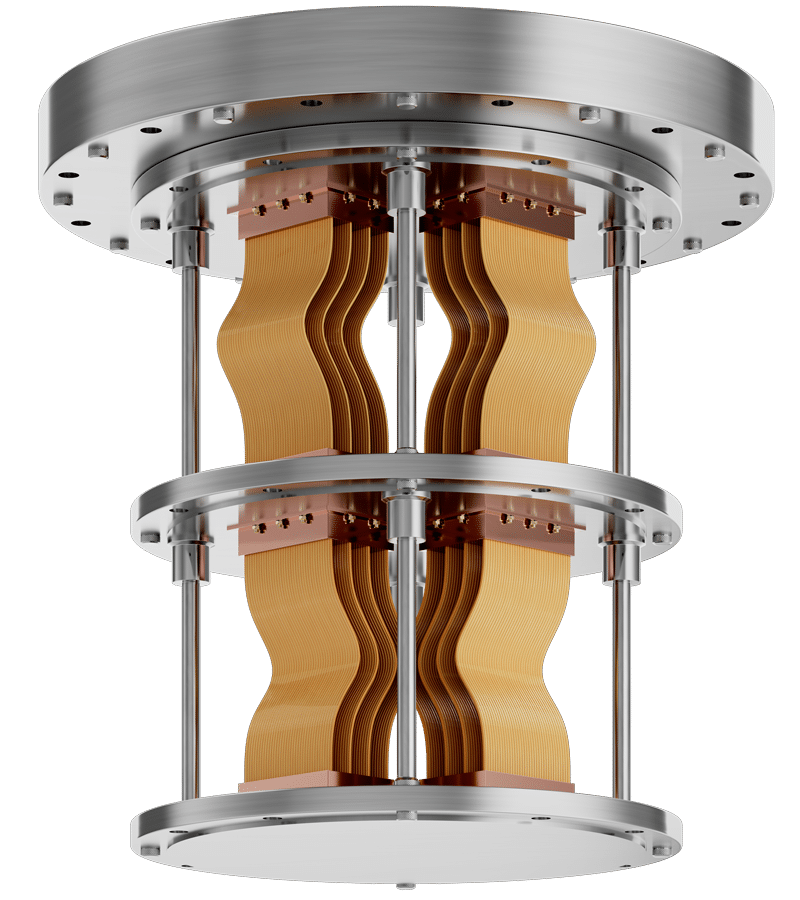
High-density flexible architectures represent an alternative approach designed to address scaling pressures. Rather than treating interconnects as a secondary layer around the core system, this approach treats them as an active part of the scalability solution. A more integrated architecture can help reduce footprint, support higher routing density, and create a more efficient overall layout.
It can also create opportunities to simplify integration by replacing more complex wiring schemes with designs better suited for tighter packaging and more streamlined assembly. In demanding cryogenic environments, material selection and controlled electrical design become part of that same architectural conversation.
Why Capability Investment Matters
Addressing these challenges requires more than a product concept. It requires sustained engineering investment, validation discipline, and continued development of the infrastructure needed to support increasingly demanding system requirements.
Capability development matters because scalable interconnect innovation depends on more than design intent alone. It requires the ability to characterize electrical performance, strengthen validation workflows, and refine designs through ongoing engineering iteration. Recent investments, including expanded electrical test capability through vector network analyzer instrumentation, reflect a deliberate effort to support deeper characterization capability and continued interconnect development. Together, these efforts point to a long-term commitment to advancing interconnect architectures for scalable quantum systems in a way that is intentional, practical, and grounded in engineering execution.
Looking Ahead
Quantum computing will continue to demand progress across the full hardware stack. As systems scale, the interconnect layer will play an increasingly important role in enabling density, performance, and integration at the system level.
Scalable quantum infrastructure will require close alignment between architecture, interconnect design, manufacturing precision, and system integration. The goal is not only to improve individual components, but to make next-generation system architectures more achievable in practice.
At All Flex Solutions, we approach quantum interconnect challenges as system design problems, where electrical performance, packaging efficiency, manufacturing control, and integration all have to work together. That perspective will continue to shape how we support the development of scalable quantum architectures.
Partner With All Flex
Contact our team to explore interconnect architectures for scalable, next-generation quantum hardware.
Frequently Asked Questions
Why is interconnect architecture important for scaling quantum systems?
What are the challenges of traditional interconnects in quantum systems?
How can flexible interconnect architecture support quantum systems?
Partner with All Flex for innovative solutions, expert guidance, and quality production of your next circuit board project. Contact our team of experts and receive a response within 24 hours!