
As electronic devices become smaller, faster, and more complex, traditional rigid boards and discrete wiring systems start to limit what you can achieve. Space constraints and additional interconnects introduce additional points of failure. With a flexible circuit PCB, however, you can route circuitry through tight or dynamic spaces while reducing reliance on connectors. Every design will align with tight performance and reliability requirements.
At All Flex Solutions, we engineer flexible circuits to solve real-world challenges for medical, defense, and aerospace electronics industries. Every solution is designed to reduce weight and improve thermal performance while maintaining optimal functionality and manufacturability.
Whether you are designing for tight spaces, high-performance environments, or long-term durability, understanding the benefits of flexible circuit technology can help you make better design decisions.
Where Does a Flexible Circuit PCB Deliver the Most Value?
You see the greatest value from a flexible circuit PCB when your design constraints start to limit performance, packaging, or reliability. Instead of adapting your system to fit rigid limitations, you can design around the realities of your application.
In high-density electronic packaging, you can route more functionality into less space without adding unnecessary bulk. This becomes especially important when you’re working within strict size or weight requirements, where every layer and interconnect has a measurable impact.
As your system architecture becomes more complex, reducing interconnect dependency helps you simplify the overall design. Fewer connectors and solder joints mean fewer opportunities for failure, which directly supports long-term reliability. That advantage becomes even more important in environments with constant vibration, movement, or thermal variation. You need a solution that maintains integrity under stress without introducing weak points.
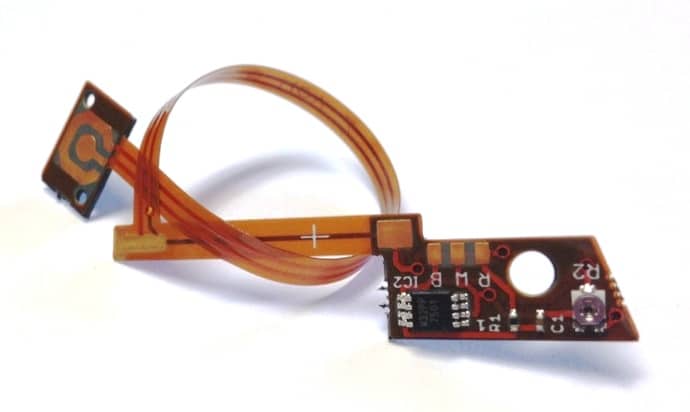
What Are the Key Benefits of Flexible Circuit PCB Technology?
From packaging constraints to long-term reliability, flexible circuit PCBs allow you to execute and simplify designs that would otherwise require trade-offs.
Solves Complex Packaging Challenges
Instead of breaking your system into multiple rigid sections, you’re able to integrate circuitry into a single form that fits your available space. This approach supports higher circuit density while reducing the need for connectors and separate components. It also makes installation more straightforward, since the design aligns more naturally with the mechanical structure.
Reduces Assembly Costs
Flexible circuit PCB reduces connectors and solder joints that require manual effort. With fewer touchpoints in the build process, you limit opportunities for variation and rework. You can also validate performance earlier through pre-assembly testing, which helps you move into production with greater confidence and consistency.
Replaces Traditional Wiring and Rigid Boards
By consolidating what would usually require multiple boards and wire harnesses, you simplify your overall system architecture. This reduces the number of interconnection points that can fail over time. It also removes the variability that comes with manual wire routing, giving you a more controlled and repeatable outcome across builds.
Minimizes Weight and Space
With a flexible circuit PCB, you can significantly reduce both weight and profile compared to traditional wiring approaches. Ultra-thin constructions make better use of available space inside your assembly, which is especially valuable when designs must meet strict size or weight constraints.
Supports Dynamic Flexing Applications
The flexible circuit PCB solution is designed to handle repeated flexing without degrading performance. The circuitry maintains electrical integrity through continuous motion, even over many cycles. This makes it ideal for applications where reliability under dynamic conditions is critical.
Improves Thermal Management
By dissipating heat more effectively than many conventional materials, you can support higher operating temperatures without adding complexity. This reduces the need for additional cooling components and helps maintain consistent performance.
Enhances Product Design and Aesthetics
You create a cleaner, more organized internal layout by reducing the clutter associated with wires and connectors. This leads to a more consistent design from unit to unit, which supports both performance and overall build quality. In many cases, it also contributes to how the final product’s quality is perceived, especially in applications where precision and reliability are expected.
Partner with All Flex
A flexible circuit PCB offers a more effective way to meet packaging constraints, improve reliability, and bring greater consistency into your manufacturing process. Instead of working around limitations, you can move forward with a design and production approach that supports performance from the start.
To simplify development and improve outcomes, explore flexible circuit PCB solutions from All Flex Solutions.