
PCB connectors play a central role in maintaining reliable electrical performance while accommodating movement and compact packaging. However, you need the right connection strategy to reduce failure risk, improve durability, and support long-term performance.
With All Flex Solutions’ advanced flexible PCB solutions for demanding applications, you can integrate PCB connectors that align with your design and reliability requirements.
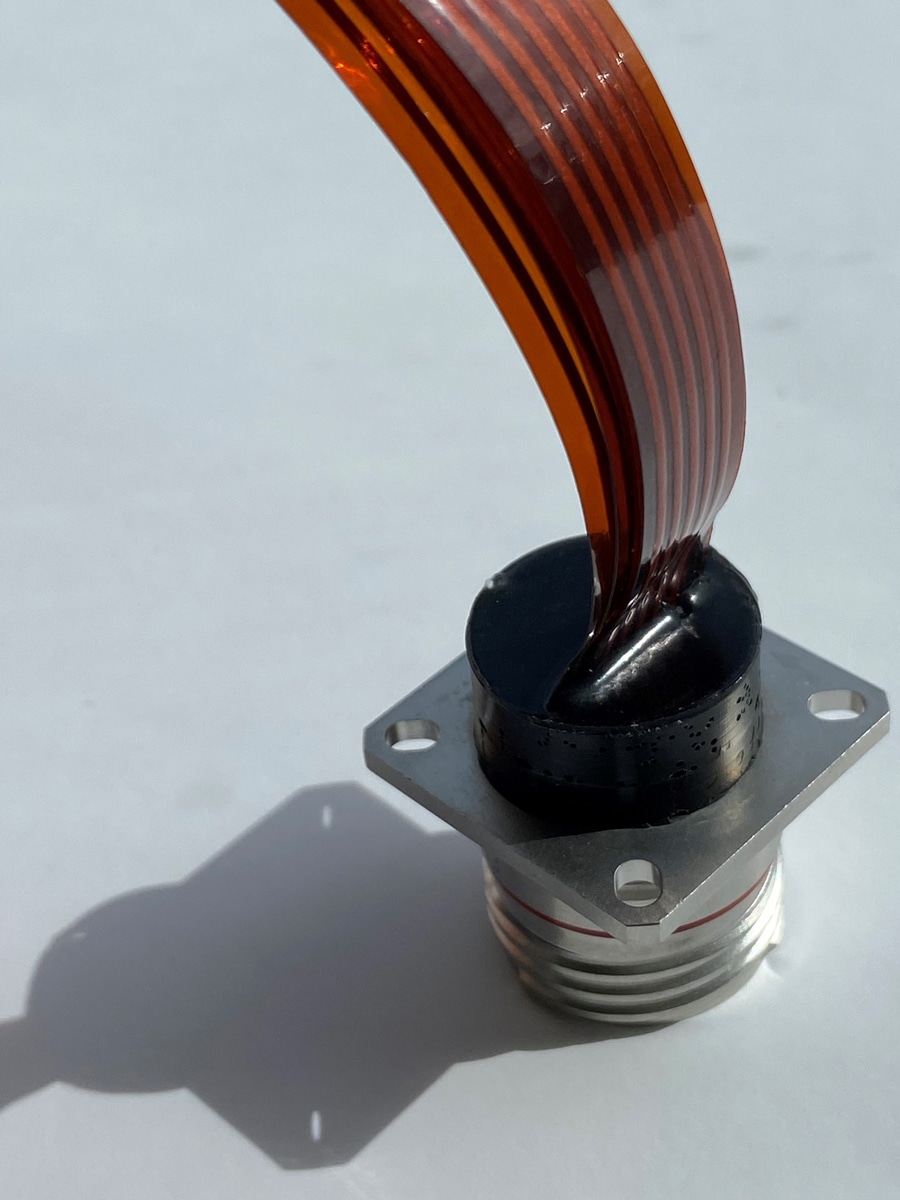
Why Is Choosing the Right PCB Connector Critical in Flexible Circuits?
When your design includes bending, vibration, or repeated movement, connector interfaces become one of the highest-risk areas for failure. Mechanical forces concentrate at transition points, transferring strain into solder joints and contacts. Even small movements can lead to wear, cracking, or loss of continuity. Tight packaging further limits strain relief options. More stress in already vulnerable areas raises the risk of intermittent connections.
Electrical reliability is just as important, especially in highly regulated or harsh environments where long-term durability is non-negotiable. Selecting the right PCB connector helps you manage mechanical stress, preserve signal integrity, and support lifecycle requirements by aligning connector design methods with real-world operating conditions.
What Types of PCB Connectors Are Commonly Used in Flex and Rigid Flex Designs?
Designs that include bendable sections or transitions between rigid areas rely on PCB connectors to manage both electrical continuity and mechanical stress.
Common PCB connector options include:
- Board-to-board
- FFC and FPC
- ZIF and latch style
- Direct soldered tail
Every PCB connector choice introduces tradeoffs. Height and footprint affect available space and stackup, while retention force and mating style influence durability under motion and vibration. You must also weigh assembly complexity and rework requirements against how the connector impacts bend radius and strain at transition areas.
How Do Design and Manufacturing Factors Influence PCB Connector Performance?
PCB connector reliability depends heavily on how the circuit is designed and built. Stiffener placement helps control where movement occurs, while copper weight and pad design affect solder joint strength and electrical performance. The choice between coverlay and solder mask at connector interfaces also influences adhesion, insulation, and durability under mechanical stress.
Manufacturing discipline is just as critical. Tight assembly tolerances, consistent soldering, and inspection reduce variability, while good DFM and DFA practices ensure stress is managed at transition areas, and assemblies can scale reliably into production. When design and process control work together, PCB connectors are far more likely to meet long-term performance requirements.
Partner With All Flex
Selecting the right PCB connector strategy is essential for ensuring electrical reliability, mechanical durability, and manufacturability in designs that include bendable or multi-layered circuits. Every decision, from connector type and placement to design for assembly, directly impacts long-term performance and production scalability.
All Flex Solutions brings deep expertise in integrating connectors into complex circuits. Learn more about our flexible circuits solutions that perform reliably even in the most demanding applications.